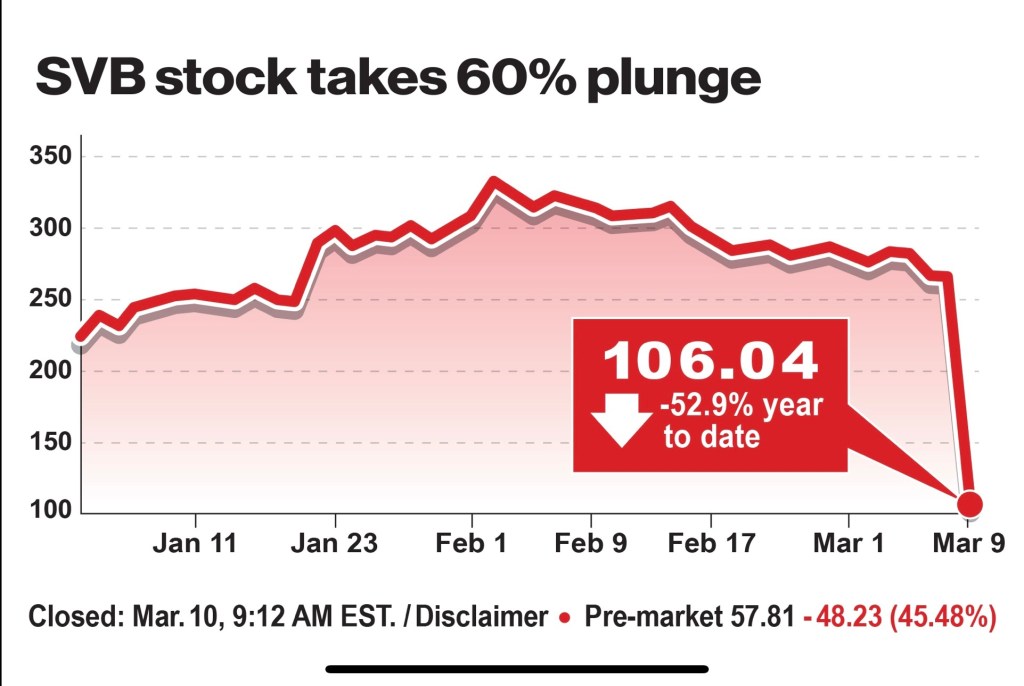
Silicon Valley Bank (SVB), the bank of choice for tech startups, has been shut down by the Federal Deposit Insurance Corporation (FDIC) to protect its deposits. The bank’s stock price tanked 60%, and a further 20% in after-hours trading, causing panic in the market. Urgent phone calls and social media status updates had echoes of the 2008 financial crisis as already cash-starved startups scrambled to recover their deposits.
What Went Wrong?
SVB has been a significant player in the start-up scene, offering banking services to new businesses when no other bank would, making it the banking partner for nearly half of the venture-backed tech and healthcare companies listed on stock markets in 2022. Activity in the venture capital (VC) market, however, steadily declined throughout 2022, and the bank, propped up by the deposits of VC-backed firms, expected further challenges.
Client cash burn remained elevated and increased further in February 2023, resulting in lower deposits than forecasted. With news of more rate hikes on the way and expected market pressure and cash burn, the bank made the decision to improve liquidity, planning to re-invest the funds from Wednesday’s sale in shorter-term debt while doubling its term borrowing to $30 billion.
The bank maintained that it was “well capitalized.” However, SVB’s failure to predict the rising rate environment, or plan for a deposit drawdown with a super-concentrated customer portfolio, put the bank at significant risk. As reports of delays, pending transfers, and lack of access to customer service spread, fear compounded the bank run.
Lessons for the Financial Industry
SVB’s downfall highlights the importance of diversified risk and effective financial management in the banking industry. The bank’s concentrated customer portfolio and over-reliance on the VC market made it vulnerable to market volatility, leading to significant losses and the eventual closure. Other financial leaders must learn from this and avoid making the same mistakes.
Furthermore, SVB’s crisis management highlights the importance of transparent communication during a crisis. The bank’s CEO, Gregory Becker, attempted to quell fears, but the ship had already sailed. Effective communication could have prevented the market panic and the subsequent bank run.
In Conclusion
The closure of Silicon Valley Bank highlights the vulnerability of the banking industry, even for seemingly robust banks. Other financial leaders must learn from SVB’s mistakes, diversify their risks, and prioritize effective financial management to avoid similar crises. Effective communication during a crisis can also prevent a market panic and a subsequent bank run.
Thank you for taking the time to read this article. If you found it helpful, please follow me on LinkedIn and Twitter for more updates and insights on the latest fintech news. And don’t forget to subscribe to my newsletter for even more exclusive content.
Frank Estrada

 The FinTech Frontier
Leave a comment